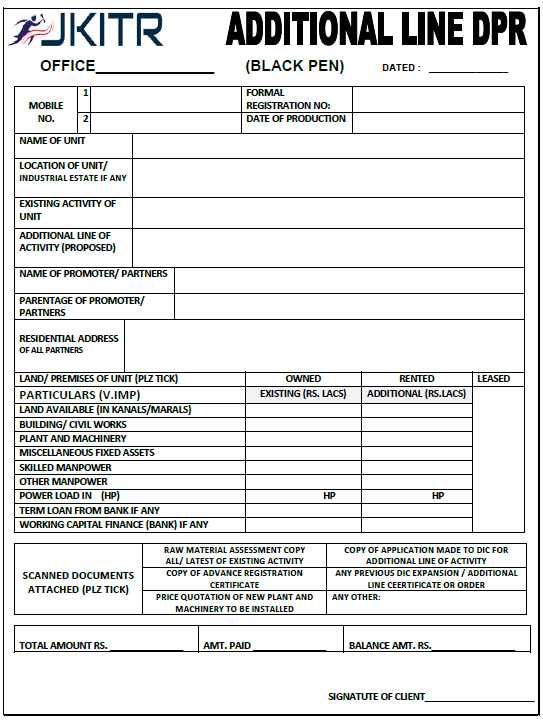
A Detailed Project Report (DPR) for MSMEs is a comprehensive document that outlines all the details of a proposed project. It serves as a roadmap for the implementation of the project and is essential for obtaining funding from financial institutions or government agencies. Here are the key components typically included in a DPR for MSMEs:
Executive Summary: Provides an overview of the project, including its objectives, scope, and expected outcomes.
Introduction: Describes the background and context of the project, including the rationale for undertaking it.
Project Description: Provides detailed information about the project, including its location, size, capacity, and technology requirements.
Market Analysis: Includes a market assessment to determine the demand for the product or service, as well as an analysis of competitors and market trends.
Technical Feasibility: Assesses the technical feasibility of the project, including the availability of technology and infrastructure.
Financial Viability: Includes a detailed financial analysis, including cost estimates, revenue projections, and financial indicators such as NPV, IRR, and payback period.
Implementation Schedule: Outlines the timeline for implementing the project, including key milestones and activities.
Risk Analysis: Identifies potential risks associated with the project and proposes mitigation measures.
Environmental and Social Impact Assessment: Assesses the potential environmental and social impact of the project and proposes measures to minimize adverse effects.
Management and Organizational Plan: Describes the management structure and organizational plan for implementing and operating the project.
Resource Requirements: Specifies the resources required for the project, including manpower, raw materials, and equipment.
Regulatory and Legal Requirements: Identifies the regulatory and legal requirements that need to be complied with for the project.