Online Company Registration in India - An Overview
online Company Registration in India - An Overview
A private limited company is a business entity offering limited owner liability. It is apt for a small number of shareholders and allows up to 200 members along with flexibility in shares and shareholdings.
One of the most highly recommended methods for starting a business in India is to establish a private limited company, which provides its shareholders with limited liability while imposing certain ownership restrictions. When it is LLP, the partners will manage it. On the other hand, a private limited company registration allows for directors and shareholders to be separate entities.
As your dependable legal advisor, Go Legal offers a cost-efficient service for registering your company in India. We handle all legal procedures and ensure compliance with the regulations set forth by the Ministry of Corporate Affairs (MCA). Upon successful completion of the pvt Ltd company registration process, we provide you with an Incorporation certificate (CoI), as well as PAN and TAN documents. With these in hand, you can easily establish a current bank account and commence your business operations.
Benefits of Pvt Ltd Company Registration
Benefits of Pvt Ltd Company Registration
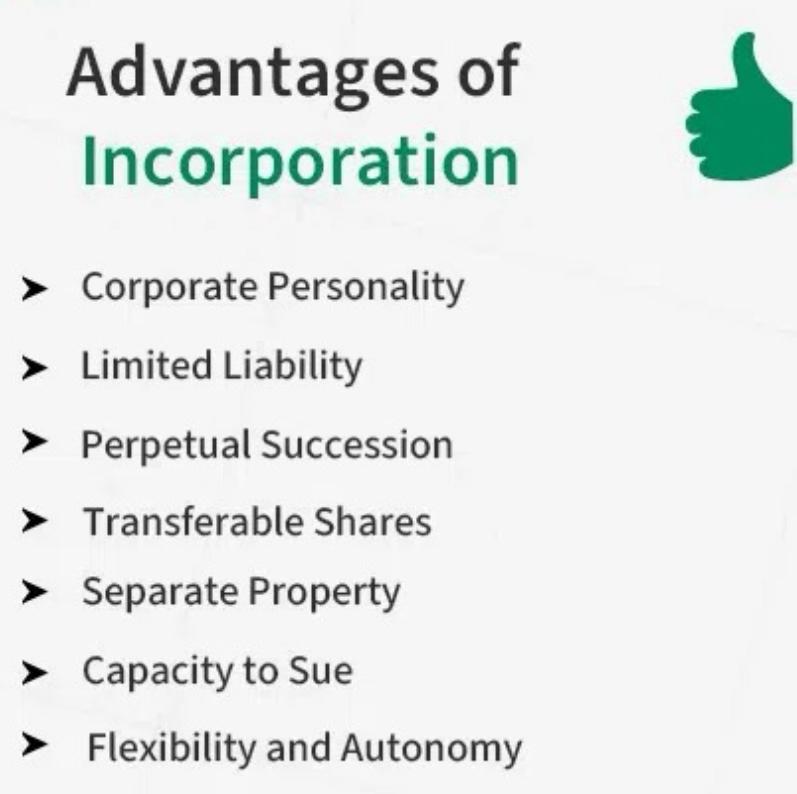
There are numerous advantages to registering a company. By doing so, you enhance the credibility of your business, which can lead to increased consumer trust. Additionally, company registration online can provide various benefits that can help your business to grow and succeed. Shield from personal liability and protects from other risks and losses Attract more customers Procure bank credits and good investment from reliable investors with ease Offers liability protection to protect your company’s assets Greater capital contribution and greater stability Increases the potential to grow big and expand
How to Register a Company?
How to Register a Company?
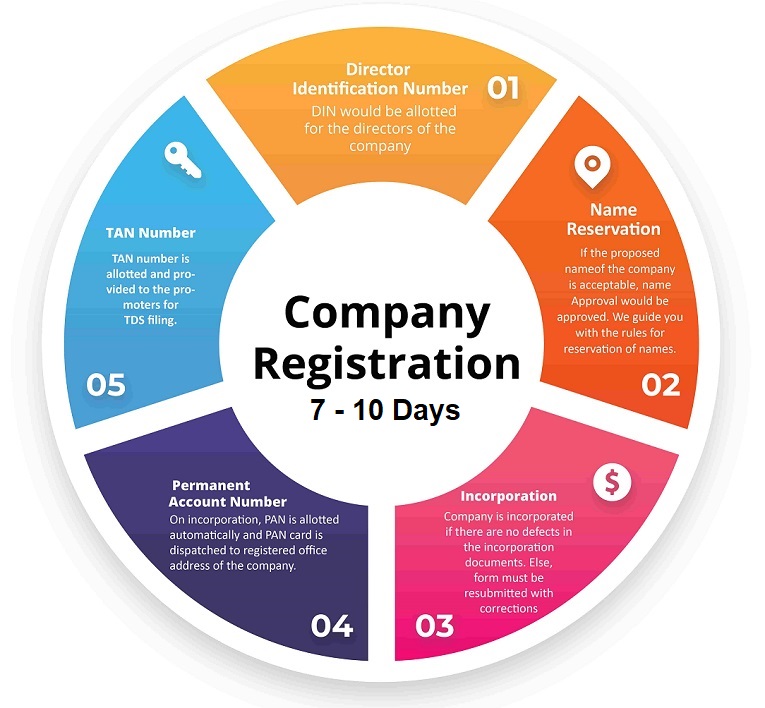
Registering a company in India has become incredibly convenient and accessible. At Go Legal , we have simplified the process to ensure a seamless experience, whether you want to register a private limited company or any other business structure. You can gain comprehensive insights into the registration procedure with few essential steps. The online registration system has made the entire process user-friendly and streamlined, eliminating any hassles. Steps For Company Registration Process in India
Step 1: Collecting Initial Documents Gather the necessary documents and get them verified for the incorporation process.
Step 2: DSC and Name Approval Apply for Digital Signature Certificate (DSC) and seek approval for your company name from MCA.
Step 3: Collecting Additional Documents Acquire the second set of required documents and ensure their verification.
Step 4: Drafting MOA and AOA Prepare the Memorandum of Association (MOA) and Articles of Association (AOA) for your company.
Step 5: Final Form Upload Upload the completed documents and forms for the final stage of company incorporation.
Characteristics of Private Limited Company
Characteristics of Private Limited Company

Members
According to the applicable Act, a private limited company must have a minimum of two members, with a maximum limit of 200 shareholders.
Number of directors
As per the Act, a private limited company is required to have a minimum of two directors, while the maximum number of directors allowed is 15.
Limited liability
In a private limited company, the liability of its members or shareholders is limited. This means that in the event of company losses, shareholders are not personally liable to sell their personal assets for repayment. They are only responsible for the amount of shares subscribed or the guaranteed amount agreed upon.
Perpetual succession
Perpetual succession ensures that a private limited company continues to exist legally, regardless of factors such as insolvency, bankruptcy, or the death of any of its members. The company's existence is perpetual.
Authorized and paid-up share capital
A private limited company must have an authorized share capital of at least ₹1 lakh. The amendment to the Companies Act removed the requirement for a minimum paid-up share capital.
Name
The name of a private limited company should include the words 'private limited' at the end. For example, if the company name is ABC, it should be written as 'ABC Pvt. Ltd' in official communications and registration forms.
Prospectus
A prospectus provides a detailed statement about the company's status and affairs. However, a private limited company cannot issue a prospectus since it is not permitted to invite the public to subscribe to its shares.
Index of members
A private limited company is not obligated to maintain an index of its members according to the Act. Conversely, a public company is required to maintain such an index.
Checklist for Private Limited Company Registration in India
Checklist for Private Limited Company Registration in India
As defined by the Companies Act, 2013 one must guarantee to meet the checklist requirements without fail for Private Limited Company Registration in India.
Two Directors:
A private limited company must have at least two directors, with a maximum of fifteen. A minimum of one of the company's directors must be a resident of India.
Unique Name
The name of your pvt ltd company must be unique. The suggested name should not match with any existing companies or trademarks in India.
Minimum Capital Contribution:
There is no minimum capital amount for a Pvt ltd company. A Pvt limited company should have an authorised capital of at least ₹1 lakh.
Registered Office:
The registered office of a pvt ltd company does not have to be a commercial space. Even a rented home can be the registered office, so long as an NOC is obtained from the landlord.
Types of Private Limited Company
Types of Private Limited Company
Company Limited by Shares
In companies limited by shares, the liability of members is limited to the nominal share amount stated in the Memorandum of Association. Shareholders cannot be held liable for more than the capital invested in the company.
Company Limited by Guarantee
In a private limited company limited by guarantee, the liability of members is limited to the amount of guarantee specified in the Memorandum of Association. Therefore, members of a Private Limited Company Limited by Guarantee are not liable for an amount exceeding their guarantee stated in the Memorandum.
Furthermore, the members' guarantee in a Company Limited by Guarantee can only be invoked in the event of the company's winding up. The guarantee provided by the members cannot be called upon while the company is operating normally.
Unlimited Companies
Unlimited companies are businesses with no limitations on the liability of their members. Each member is personally liable for the company's debts and liabilities to the full extent. Consequently, if an unlimited company is wound up, creditors have the right to recover the company's debts and liabilities from the shareholders.
Despite not offering limited liability protection to shareholders, an unlimited company is still recognised as a separate legal entity. As a result, the members of an unlimited company cannot be sued individually.
Why Is It Important to Choose the Right Business Structure?
Why Is It Important to Choose the Right Business Structure?
Choosing the right business structure is crucial for several reasons:
- Legal Compliance: Different business structures have varying legal requirements. Selecting the appropriate structure ensures compliance with relevant laws, regulations, and taxation norms in India.
- Liability Protection: The right structure can help safeguard personal assets from business liabilities. For instance, forming a limited liability partnership or a private limited company provides limited liability protection to its owners, shielding personal assets from business debts.
- Tax Implications: Each business structure has its own tax implications. Opting for the right structure can help minimise tax liabilities and take advantage of available tax benefits and incentives, ultimately maximising profits.
- Funding Opportunities: The choice of business structure can impact the ease of raising capital. For example, a private limited company can issue shares, making it more attractive to investors and lenders.
- Operational Flexibility: Different structures offer varying degrees of operational flexibility. Choosing the right structure allows business owners to define roles, responsibilities, and decision-making processes according to their needs.
- Long-Term Goals: The business structure should align with your long-term goals. It should facilitate growth, expansion, and eventual exit strategies such as mergers, acquisitions, or going public.
Name and Capital of the Company
Name and Capital of the Company
Selecting a company name involves a creative process influenced by factors like industry, target audience, and personal preference. The capital of a company can fluctuate significantly and is determined by the resources and investments necessary for initiating and running the business.
Private Limited Company Registration Compliances
Private Limited Company Registration Compliances
After the process of company registration in India, it is necessary to adhere to various compliance regulations in order to avoid potential fines and legal repercussions. Some of the key post-registration requirements include:
Auditor Appointment: Within 30 days of company incorporation, every Indian company must appoint a practising, certified, and registered (CA).
Director DIN KYC: Every year, individuals who possess a Director Identification Number (DIN) should undergo a DIN KYC process. During the company incorporation process, the company can get the DIN. This helps to verify the phone number and email address on file with the MCA.
Commencement of Business: The shareholders of the company must deposit the subscription amount specified in the MOA within 180 days of incorporation, and the company must create a bank current account. Therefore, to receive a business incorporation certificate, the shareholders of a company established with a paid-up capital of ₹1 lakh must deposit ₹1 lakh into the company's bank account. They should also file a copy of the bank statement with the MCA.
MCA Annual Filings: Every financial year, the MCA must get a copy of the financial statements from each company registered in India. A corporation that incorporates between January and March may elect to include the first MCA annual return in the annual filing for the following fiscal year. Forms MGT-7 and AOC-4 are the components of the MCA yearly return. The Directors and a working professional must digitally sign both of these documents.
Income Tax Filing: Every financial year, businesses should file an income tax return using form ITR-6. The business should file the income tax before the deadline for each financial year, irrespective of the date of incorporation. The company's income tax return must be digitally signed using the director's digital signature.
Requirements to Register a Company
Requirements to Register a Company
Before registering company in india, it must meet a specific set of conditions. The following are such conditions:
1. Directors and Members
As mentioned earlier, at least two directors and no more than 200 members are necessary for legal Private Limited Company Registration in india. This is a mandatory requirement as per the Companies Act of 2013. The Directors should honor the following conditions:
- Each directors should carry a DIN issued by the MCA
- One of the directors must be an Indian resident, which means they must have spent at least 182 days there in the previous calendar year.
2. The Business's Name
When selecting a name for a private limited company, there are two factors must be into consideration:
- Name of the principal activity
- Private Limited Company
3.Address of the registered office
Upon completion of the company registration process, the company should give the permanent address of the business's registered office to the company registrar. The registered office is the primary location where business takes place and stores all documentation pertaining to the company.
4. Getting Additional Documents
To verify the authenticity of electronically submitted documents, every business must obtain a DSC. Furthermore, the business needs credentials from such professionals as secretaries, chartered accountants, and cost accountants that engage them for various operations.
Comparative List of Different Types of Business Structures in India
Comparative List of Different Types of Business Structures in India
Documents Required for Online Company Registration
Documents Required for Online Company Registration
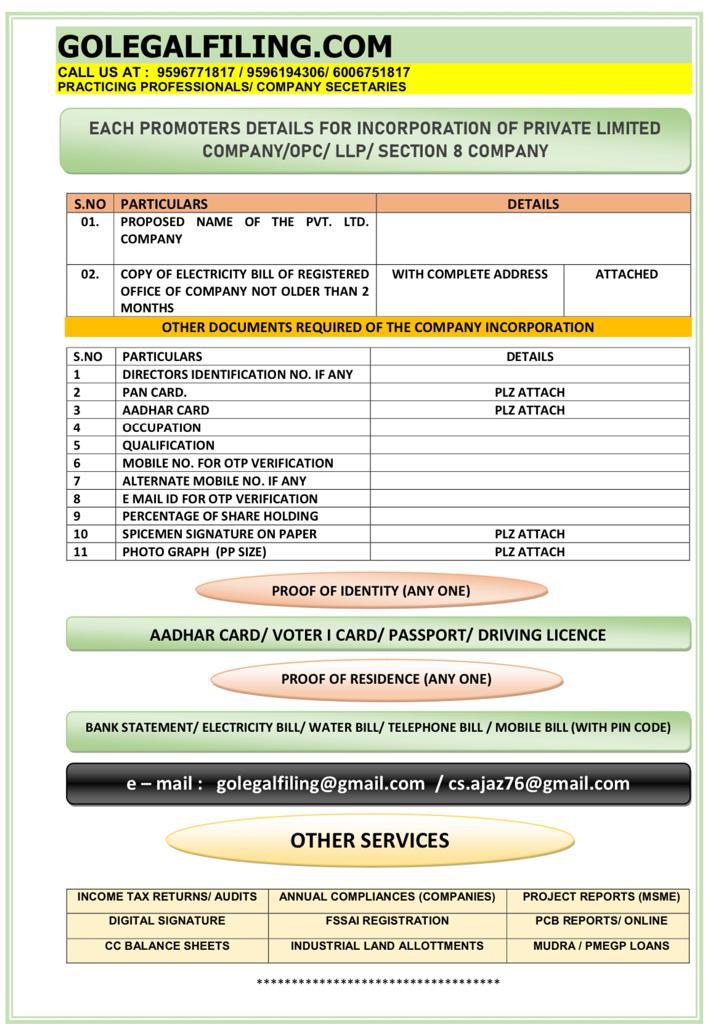
The MCA requires proper identity and address proof for private limited company registration in India. The following documents are the requirements for registering a company in India:
Identity and Address Proof
- Scanned copy of PAN card or passport (foreign nationals & NRIs)
- Scanned copy of voter ID/passport/driving license
- Scanned copy of the latest bank statement/telephone or mobile bill/electricity or gas bill
- Scanned passport-sized photograph specimen signature (blank document with signature [directors only)
Registered Office Proof
- Scanned copy of the latest bank statement/telephone or mobile bill/electricity or gas bill
- Scanned copy of notarised rental agreement in English
- Scanned copy of no-objection certificate from the property owner
- Scanned copy of sale deed/property deed in English (in case of owned property)
Note: Your registered office need not be a commercial space; it can be your residence too.
Certificate of Incorporation of a Private Limited Company
Certificate of Incorporation of a Private Limited Company
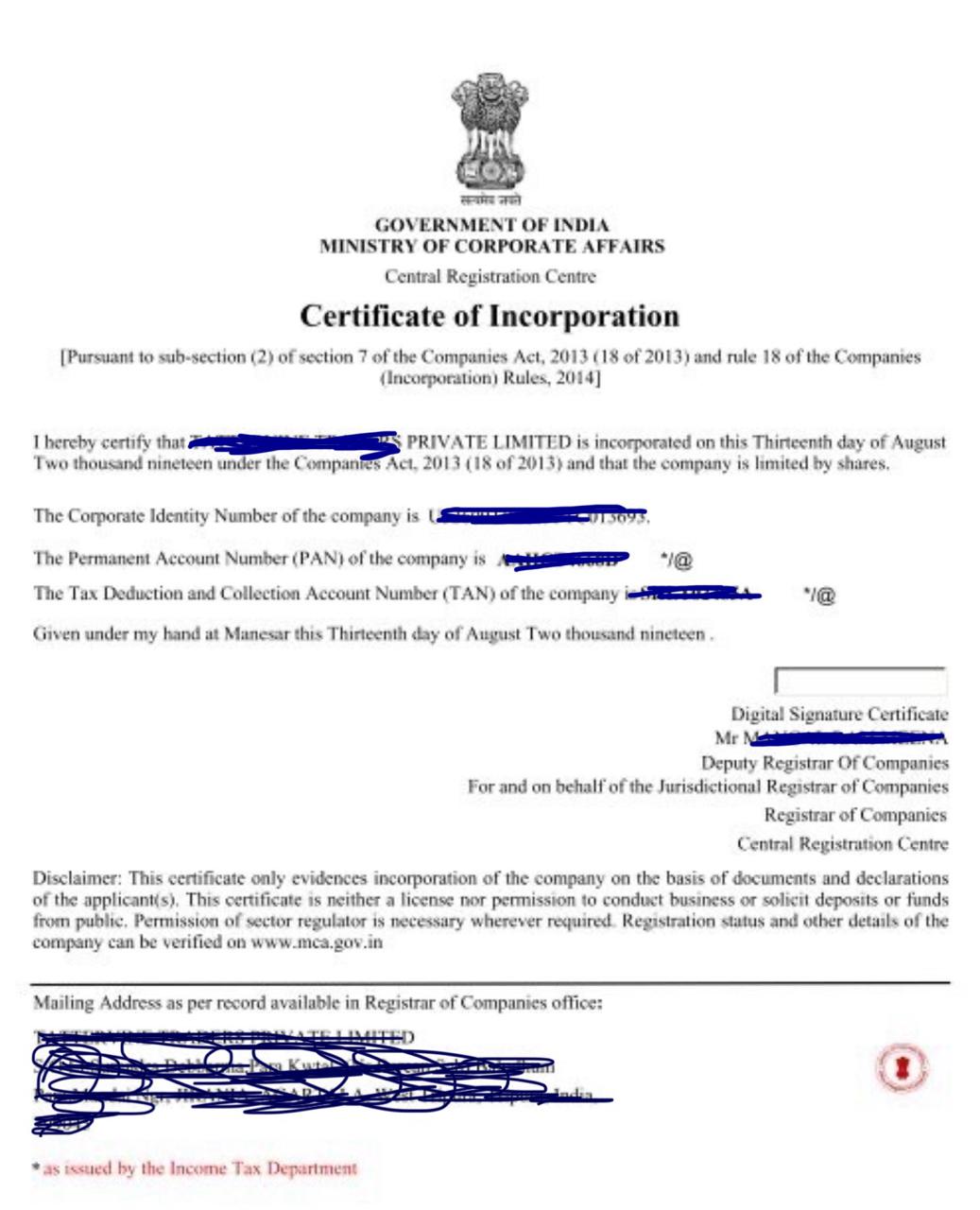
The Certificate of Incorporation is an official document issued by the Registrar of Companies (RoC) upon the successful registration of a private limited company in India. It signifies the legal existence of the company as a separate legal entity.
The Certificate of Incorporation typically includes the following information:
- Company Name: The registered name of the private limited company.
- Company Identification Number (CIN): A unique identification number assigned to the company by the RoC.
- Date of Incorporation: The date on which the company was officially registered.
- Registered Office Address: The address of the registered office of the company.
- Authorized Capital: The maximum amount of share capital that the company is authorized to issue.
- Directors' Details: Names and addresses of the directors appointed at the time of incorporation.
The Certificate of Incorporation serves as proof of the company's legal existence and is often required for various business transactions, such as opening a bank account, entering into contracts, or applying for licenses and permits.
Reasons to Consider Go Legal for Private Limited Company Registration
Reasons to Consider Go Legal for Private Limited Company Registration
We offers a completely online private limited company registration process, allowing you to register your entity without leaving the comfort of your home. Our experts can complete the entire company incorporation process within 14 days.
Our company registration package includes:
- DIN and DSC for two Directors
- Drafting of MoA & AoA
- Registration fees and stamp duty
- Company incorporation certificate
- Company PAN and TAN
- Zero balance current account - Powered by DBS bank
By following these steps, you can begin the process of forming your own private limited company. It is advisable to seek advice from professionals to make informed decisions and ensure seamless growth.
Importance of Company Registration Certificate
Importance of Company Registration Certificate
A Company Registration Certificate serves as a crucial document for various reasons:
- Legal Proof of Identity and Existence: The certificate proves the company's identity and existence as a separate legal entity. It includes a unique Corporate Identification Number (CIN) issued by the Ministry of Corporate Affairs (MCA), acting as the company's distinctive identifier.
- Authorization to Commence Activities: The certificate confirms that the company has successfully registered with the Registrar of Companies (RoC), enabling it to initiate operations in accordance with the conditions specified in the Memorandum of Association (MOA).
Consequences of Misleading Information
Consequences of Misleading Information
It is essential to understand the implications of providing inaccurate information during registration, as stated in Section 7(7) of the Companies Act of 2013.
The Tribunal may take the following actions:
a) Order Management Regulation: The Tribunal can issue orders to regulate the company's management, including potential modifications to the MOA.
b) Release of Members' Responsibilities: The company may be directed to release all members from their responsibilities.
c) Cancellation of Registration: The company's name may be withdrawn from the RoC, resulting in the cancellation of the registration certificate.
d) Dissolution Order: In extreme cases, the Tribunal can issue an order for the company's dissolution.
Rights and Benefits
Rights and Benefits
Possessing a Company Registration Certificate grants you various rights and benefits provided by your company's legal structure. These include tax breaks, perpetual existence, and other advantages.
Additional Reasons for the Importance of the Certificate
Additional Reasons for the Importance of the Certificate
The Company Registration Certificate is also necessary for the following purposes:
- Business Bank Account: It enables the company to open a dedicated business bank account for financial transactions.
- Share Distribution: The certificate allows the company to issue and distribute shares to investors or shareholders.
- Business Loan: To secure a loan for the business, the certificate serves as crucial documentation required by lenders.
- Business Sale: In the case of selling the company to a third party, the certificate is essential for a smooth and legal transfer of ownership.
Ensure Compliance and Reap the Benefits
Ensure Compliance and Reap the Benefits
Obtaining a Company Registration Certificate ensures legal compliance, grants access to financial services, and paves the way for various business opportunities. Trust Go to assist you throughout the registration process and provide expert guidance to help you leverage the advantages of a valid certificate.
PROFESSIONAL FEE FOR INCORPORATION
PROFESSIONAL FEE FOR INCORPORATION

We provide comprehensive services for private limited company registration in India. The registration fee for a private limited company can vary depending on factors such as authorized capital, state-specific requirements, and other incidental expenses.
To get an accurate assessment of the registration fees applicable to your specific situation and state, we recommend talk to experts. They will guide you through the registration process, provide a breakdown of the fees involved, and assist you in meeting all the necessary requirements.